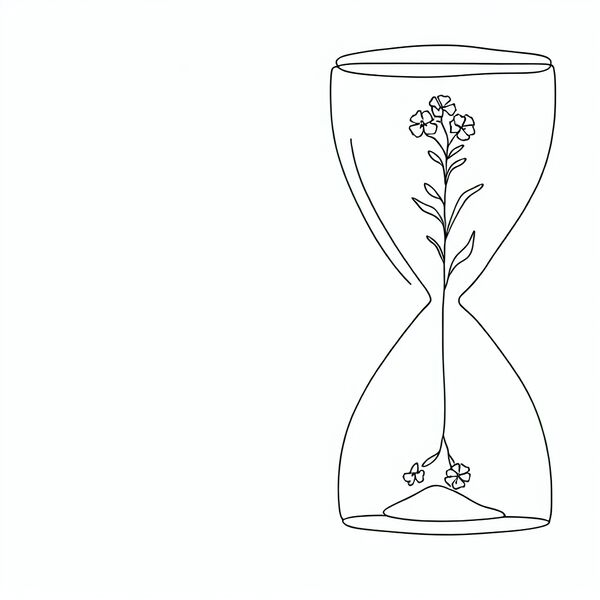
The Moss Wing · Universal Practice
Memento Mori
You're going to die. That isn't a threat — it's an invitation to live while you can.
I was checking my phone at a funeral. My college roommate was thirty-one. Brain aneurysm. He had a "someday" list too. Neither of us had crossed off a single thing. Behind every Roman triumph rode a slave whispering "remember, you will die." It wasn't morbid. It was medicine — the practice of keeping death close enough to make every remaining hour feel like the gift it actually is.
In 5 minutes
Memento mori means "remember you will die": keeping death in mind helps you live the time you have with care.
- Remembering death is meant to bring clarity, not fear.
- The "someday" list hides things that matter now.
- Seneca, Montaigne, Socrates and the Buddha each made peace with mortality.
Try today: Write one message — a thank-you or a sorry — to someone you love. Send it, or keep it as an unsent letter.
Before you go in…
One small question at the door. No right answers, just yours, and then how Memento Mori would reason about it.
There is a call you keep meaning to make: an apology, a thank-you, an I miss you. It has sat on your someday list for months. What happens to it?
Content note: This room discusses death and suicide. If you're struggling, help is here — Tele-MANAS 14416 (India) · findahelpline.com.
I was checking my phone at a funeral.
Not obviously—I'm not a monster. It was in my pocket, and I'd tilted it slightly, just enough to see the screen. A work email. Something about a deadline that felt urgent three hours ago and now, standing six feet from a closed casket containing my college roommate, felt like a message from another planet.
Raj was thirty-one. Brain aneurysm. Went to sleep on a Wednesday, didn't wake up Thursday. His mom found him. He looked peaceful, everyone kept saying, like that was supposed to help.
I put the phone away. I looked at the casket. And a thought hit me so hard it almost buckled my knees:
I have a "someday" list on my phone that's forty-seven items long. Raj had one too. Neither of us has crossed off a single thing.
His will never get crossed off now.
That was six years ago. I still carry that list. I've crossed off eleven items. That's not a brag—it's a confession. Because even after standing in a room that smelled like lilies and embalming fluid, even after watching Raj's mother try to stand and fail, even after all of that, I went back to my life and did what humans do best: I forgot.
I forgot that I'm going to die.
You're going to forget too, probably within an hour of finishing this piece. That's okay. That's human. But the people who figured out how to not forget—or at least, how to forget less often—they stumbled onto something that changed everything. Not a religion. Not a self-help trick. A two-word Latin phrase that hits like a freight train if you let it:
Memento mori. Remember you will die.
It sounds like a threat spray-painted on a bathroom wall. It's actually the best life advice ever whispered.
The Guy Whose Job Was to Ruin the Best Day of Your Life#
Here's a job listing that would never make it past HR in 2026:
Position: Slave. Duties: Stand behind the most powerful man in Rome during his greatest triumph and whisper "you're going to die" into his ear while 200,000 people scream his name. Benefits: None. You're a slave.
But that job existed. And it might have been the most important role in the Roman Empire.
Picture it. A general has just crushed an enemy army, dragged their king back in chains, and expanded Rome's borders by a few hundred miles. The Senate awards him a triumph—the Roman equivalent of a Super Bowl parade, an Oscar ceremony, and a coronation rolled into one.
He rides through Rome in a golden chariot. His face is painted red like Jupiter. Soldiers march behind him, chanting. Captured enemies stumble in chains before him. People are throwing flowers from rooftops. Women are fainting. Children are screaming his name. For this one afternoon, this man is basically a god.
And standing right behind him, close enough to smell the sweat under the purple toga, is a slave. Leaning in. Whispering.
"Respice post te. Hominem te memento."
Look behind you. Remember you are a man.
Or, shorter: Memento mori. You will die.
Not tomorrow. Not someday. You—the guy in the golden chariot, the guy whose name they're carving into marble right now—you will rot. Your bones will turn to powder. Kids two thousand years from now will yawn through lessons about you.
The Romans weren't sadists. They were realists. They'd watched enough generals come home from war thinking they were immortal, and they'd seen what happened next: arrogance, overreach, stupid decisions, downfall. So they institutionalized a reality check. They literally assigned a human being to do nothing but remind the most important person in the room that none of it lasts.
Try this right now: Think about the best day you've ever had. The promotion, the wedding, the moment your kid was born. Now imagine someone leaning over your shoulder and whispering: This is temporary. You are temporary. What are you going to do about it?
Feel that little jolt? That's memento mori working. Keep reading.
Death as a Compass: What Even Silicon Valley Rediscovered#
Steve Jobs stood in front of his bathroom mirror every morning for thirty-three years and asked the same question.
Not "How do I beat Samsung?" Not "What's the stock price?" This:
"If today were the last day of my life, would I want to do what I'm about to do today?"
When the answer was "no" for too many days in a row, he changed something. Not a small tweak. A life overhaul.
He told the Stanford graduating class of 2005 about this. He was fifty, already diagnosed with pancreatic cancer, and he stood up there and said something that should be printed on the back of every business card in America:
"Remembering that I'll be dead soon is the most important tool I've ever encountered to help me make the big choices in life. Because almost everything—all external expectations, all pride, all fear of embarrassment or failure—these things just fall away in the face of death, leaving only what is truly important."
Six years later, Jobs was dead at fifty-six. But here's what's wild: he credited the mirror question with every major decision he ever made. Dropping out of college. Starting Apple in a garage. Getting fired from his own company and, instead of crumbling, building another one. Creating the products he believed in rather than the products that were safe.
Death wasn't his enemy. It was his editor. It cut the fluff out of his life.
And here's the thing nobody wants to say out loud: death is the ultimate productivity hack. Not in some hustle-culture, optimize-your-morning-routine way. In the deepest way possible. Because when you genuinely confront the fact that your time is running out—not theoretically, not as an Instagram caption, but in your bones—you stop doing things that don't matter. You have to. There's no room for them anymore.
Think about your own day. How much of it would survive the question: Would I do this if I knew I was dying next month?
The commute? Maybe. The meeting that could have been an email? Gone. The argument with your partner about whose turn it is to load the dishwasher? Evaporated. The three hours you'll spend tonight scrolling through videos of strangers doing things you'll forget by morning? Incinerated.
Death doesn't just clarify your priorities. It creates them. Without a deadline—and I mean the ultimate deadline—everything feels equally important, which means nothing is.
Try this tonight: Before bed, ask yourself: If I had died today, would I be okay with how I spent it? Don't force an answer. Don't guilt yourself. Just notice. Seneca did this exact exercise two thousand years ago and called it "balancing life's books." It takes sixty seconds and it will wreck you in the best way.
Your "Someday" List Is a Lie You Tell Yourself Every Morning#
You have a list. Maybe it's in your Notes app, maybe it's on a Post-it that's been stuck to your fridge so long the adhesive has given up, maybe it's just floating around in your head, getting longer every year.
Learn Spanish. Visit Tokyo. Write that book. Call Dad more. Start painting again. Go to therapy. Tell her how you feel.
Someday.
The list keeps growing because you keep adding things and never subtracting them. You've been meaning to learn guitar since 2019. You saved a link to a pottery class eight months ago. You told yourself you'd run a marathon "next year" for the last four next years.
Here's what no one tells you about "someday": it's not a day on the calendar. It's a polite way of saying "never." It's a pressure valve that lets you feel good about intentions you have no plans to act on. It's a fantasy dressed up as a plan.
I know this because I've done it. I do it. The difference between me six years ago—before Raj's funeral—and me now isn't that I've conquered procrastination. It's that I can't hide from what procrastination actually costs anymore.
Every item on your someday list that you never get to isn't just an unchecked box. It's a tiny death. A version of your life that existed as a possibility and then didn't.
Marcus Aurelius—a Roman emperor, the most powerful man in the known world, a guy who literally had the resources to do anything—wrote this in his private journal, a journal he never intended anyone to read:
"You could leave life right now. Let that determine what you do and say and think."
He wasn't writing a motivational poster. He was panicking a little. He was the emperor of Rome, he was fighting wars on multiple fronts, and he knew—because he'd watched friends die, soldiers die, his own children die—that he could be next. So he wrote himself reminders. Desperate, honest reminders. You could die today. Act like it.
Try this right now: Open your someday list. Pick one thing. The smallest, most doable thing on there. Now open your calendar and schedule it. This week. Not "soon." Not "when things calm down." Things don't calm down. They just end.
The 80-Year-Old at the Bar Who Made Me Want to Cry#
I met a man at a hotel bar in Portland two years ago. He was eighty-three. He'd been a lawyer for fifty years. Retired at seventy-five. His wife died the year after.
We were both drinking whiskey and neither of us wanted to look at our phones, so we talked. After about an hour—after he'd told me about his career, his kids, his wife's garden—he got quiet. Stared at his glass. And said:
"You know what nobody tells you about getting old? It's not the pain. It's not the forgetting. It's looking back and thinking, 'Where the hell did it go?' Sixty years of working and worrying and planning for the future, and the future is now and it's just... me, alone, in a hotel bar, talking to a stranger."
He wasn't feeling sorry for himself. He was trying to warn me.
"I spent my whole life being careful," he said. "Careful with money. Careful with my career. Careful with my feelings. You know what careful gets you? Old."
I think about that man a lot. Not because his life was tragic—it wasn't, by most measures it was successful and full. But because of the look in his eyes when he said "where did it go?" It was the look of someone who'd just realized the hourglass was almost empty and he'd spent most of the sand watching it fall instead of doing something with it.
The Stoic philosopher Seneca saw this coming two thousand years ago. He wrote an entire essay called On the Shortness of Life, and the core argument is brutal: life isn't short. We make it short. We waste it. We spend it on things we don't care about, pleasing people we don't like, chasing achievements that won't matter once we're gone. Then, at the end, we look up from our desks and wonder where the time went.
"It is not that we have a short time to live," Seneca wrote, "but that we waste a great deal of it."
Read that again. Slowly.
It's not that life is short. It's that you're blowing it.
The App That Counts Down Your Remaining Days (And Why People Love It)#
There's an app called WeCroak. It sends you five push notifications a day. Each one says the same thing, in different words:
You are going to die.
That's it. That's the app. Five times a day, your phone buzzes, and instead of a like or a retweet or a DoorDash update, you get a quote about mortality. A little memento mori vibrating in your pocket.
It's inspired by a Bhutanese tradition. In Bhutan—a tiny Himalayan kingdom that measures Gross National Happiness instead of GDP—people contemplate their own death five times a day. Not once a year during an existential crisis at 3 AM. Five times a day, the way you might check the weather or drink water.
You'd think this would make everyone miserable. It does the opposite.
Researchers who've studied this are consistently surprised. Regular death contemplation correlates with higher gratitude, more generosity, stronger relationships, and—this is the kicker—less anxiety about death. A 2012 study in Personality and Social Psychology Review found that people exposed to subtle death reminders became kinder, more present, and more connected to the people they love.
It turns out the fear of death works like a shadow on the wall. When you refuse to look at it, it grows enormous, this looming dark thing that colors everything without you realizing it. But when you turn around and face it—really look—it shrinks to its actual size. Still there. Still real. But manageable. Maybe even useful.
The Bhutanese figured this out centuries ago. Their houses have paintings of skulls and skeletons on the walls, right next to images of flowers and sacred symbols. Death isn't hidden in a hospital basement or euphemized into "passing away." It's woven into daily life. It's the neighbor you wave to on the way to work.
And Bhutan, by its own measure, is one of the happiest places on earth.
Try this for one week: Download WeCroak (it's free). Or just set five random alarms on your phone with the label "You will die." When it buzzes, pause for ten seconds. That's all. Ten seconds of remembering that this—whatever you're doing, whoever you're with—is temporary. Notice what shifts.
The Painting With Three Objects That Contains Everything#
There's a painting by Philippe de Champaigne, circa 1671, hanging in a museum in France. It contains exactly three objects: a tulip, a skull, and an hourglass.
Life. Death. Time.
That's the whole painting. It's also the whole of human existence, arranged on a table like items at a yard sale.
The tulip is gorgeous and already wilting. The skull is grinning because that's what skulls do—they find everything funny, or nothing does. The hourglass is running. It doesn't care what you think about it.
This painting belongs to a genre called vanitas—from Ecclesiastes, "vanity of vanities, all is vanity." Dutch and Spanish painters in the 16th and 17th centuries turned death into art so beautiful you'd hang it in your living room. Their compositions were loaded with symbolism: guttering candles (time running out), soap bubbles (one touch and you're gone), overturned wine glasses (pleasure draining away), wilting flowers (beauty decomposing in real time), coins and jewels (try spending those in a coffin).
They weren't nihilists. They were the opposite. By painting everything that doesn't last, they pointed—like a finger jabbing at your chest—toward what does.
Before the vanitas painters, there was the Danse Macabre—the Dance of Death. Medieval artists painted murals on cemetery walls showing skeletons waltzing with the living. Kings, peasants, popes, beggars—all dancing with the same grinning skeleton partner, all headed the same direction. In a feudal society where your entire identity was your rank, this was almost punk rock: You think your title means something? Death doesn't read your LinkedIn.
Mary, Queen of Scots, wore a watch shaped like a silver skull. Engraved on it, a line from Horace: "Pale death knocks with the same tempo upon the huts of the poor and the towers of Kings." Public clocks carried inscriptions like ultima forsan—"perhaps the last hour"—and vulnerant omnes, ultima necat—"every hour wounds you; the last one kills."
Imagine a world where checking the time was a death meditation. We can barely handle a notification about our screen time.
The Philosophers Who Made Friends With the Reaper#
Seneca: The Man Who Died Every Day Before Nero Made It Official#
Seneca wrote more about death than probably any philosopher in history. His biographer literally titled the book Dying Every Day. And Seneca earned it.
His daily practice: every night before bed, review the day as if it were your last. Every morning upon waking, remind yourself you might not sleep again. Not as torture. As calibration. A way of tuning your instrument before you play.
"Let us prepare our minds as if we'd come to the very end of life," he wrote to his friend Lucilius. "Let us postpone nothing. Let us balance life's books each day. The one who puts the finishing touches on their life each day is never short of time."
That last line is remarkably practical. You're never short of time if you treat every day as complete. You're only short of time if you're always saving it for later—banking on a "someday" that may never come.
Seneca was eventually ordered by the Emperor Nero to take his own life. Accounts say he spent his last hours comforting his friends and talking philosophy. Whatever else you say about him, he was not unprepared.
Montaigne: The Guy Who Fell Off a Horse and Found Freedom#
Michel de Montaigne—a 16th-century French writer who basically invented the personal essay—got thrown from his horse in 1569 and nearly died. His servants carried his body home, bleeding from the face, convinced he was dead.
He wasn't. He woke up in a strange half-state, drifting between consciousness and dissolution, and later described the experience as almost pleasant. The terror he'd always felt about dying just... evaporated. Nature, he realized, has its own anesthetic.
But the bigger insight came later. Montaigne sat down and wrote a line that should be tattooed on the inside of everyone's eyelids:
"To practice death is to practice freedom. A man who has learned how to die has unlearned how to be a slave."
Unpack that for a second. Every fear you carry—fear of losing your job, your reputation, your relationship, your money, your looks—is a smaller version of the fear of death. It's all the same fear wearing different masks. If you can face the big one, the source code, the final loss? The smaller ones lose their grip. You stop living defensively. You start living for real.
Montaigne also loved a story about an ancient Egyptian custom: at feasts, servants would carry out a skeleton and shout, "Drink and be merry, for when you're dead you will look like this!" We'd call that a party foul. Montaigne called it the highest form of celebration—because the only people who can truly celebrate life are the ones who've stopped pretending it goes on forever.
Socrates: The Man Who Met His Death Calmly#
Socrates told his students that "the proper practice of philosophy is about nothing else but dying and being dead." They thought he was joking. He wasn't.
When Athens sentenced him to death and handed him a cup of hemlock, he met it with a calm that his friends never forgot. They wept. He gently asked them to be still. His last recorded words were about paying back a debt he owed a friend—a rooster he'd borrowed for a sacrifice. Even dying, the man was keeping his accounts clean.
What Socrates understood, and what his students didn't until much later, was that philosophy is death practice. Every time you question an assumption, you let a small piece of your old self die. Every time you choose truth over comfort, you rehearse the ultimate letting-go. By the time the hemlock arrived, Socrates had been practicing for decades. The final exam was just a formality.
The Buddha: Death as the Starting Gun#
The Buddha's entire spiritual journey began with death. As Prince Siddhartha, he was sheltered inside a palace, kept from seeing any suffering. Then, on three trips outside the walls, he encountered an old man, a sick man, and a corpse. Three encounters with mortality. That's all it took.
He left the palace, gave up his kingdom, and sat under a tree until he figured out what to do about the fact that everything dies.
What he came up with was maranasati—mindfulness of death. Not casual, once-in-a-while awareness. Rigorous, daily practice. The Buddha told his monks that death can strike "in the time it takes to draw one breath." Not being mindful of this in every moment, he said, is negligence.
Buddhist death meditation gets intense. The Satipatthana Sutta includes what are called "cemetery contemplations"—nine stages of watching a corpse decompose, from bloated and festering to bleached bones to dust. After each stage, the practitioner says: "This body of mine, too, is of the same nature. It is going to be like that. It has not gotten past the condition of becoming like that."
Sounds horrifying. The purpose is the opposite. When you've sat—really sat—with the reality of what your body will become, the small anxieties that usually consume you (the performance review, the parking ticket, the unanswered text) lose their power. You're left with what actually matters: the people in front of you, the breath in your lungs, the fact that you're still here.
Try this (the gentle version): Sit for five minutes. Close your eyes. Think about someone you love. Now think about the fact that they will die. Not how or when—just that they will. Feel what arises. It's probably not despair. It's probably something closer to tenderness. A fierce, aching desire to be present with them while you still can. That's maranasati. That's the whole thing.
The Monks Who Say "Remember Death" Instead of "Good Morning"#
In certain Trappist monasteries—Catholic communities known for silence, discipline, and surprisingly excellent beer—monks greet each other in the hallways with a two-part call and response:
"Memento mori." Remember death.
"Memento vivere." Remember to live.
Six words. The entire philosophy. The reminder of death is incomplete without the reminder of life. They need each other. One without the other is either morbid or naive.
Some of these monks sleep in their coffins. Some keep a skull in their cells the way you might keep a plant on your desk. The Chapel of Bones in Évora, Portugal—built by Franciscan monks—has walls and pillars made entirely of human bones. Above the entrance: "Nós ossos que aqui estamos, pelos vossos esperamos." "We bones that are here await yours."
Walk into that chapel and try checking your phone. You won't. You'll stand there, surrounded by five thousand dead strangers who used to worry about all the same things you worry about, and you'll feel something you almost never feel in modern life:
Perspective.
These monks aren't depressed. They're the opposite. They've already accepted the worst possible thing that can happen—the thing that will happen, to every single one of them—and in that acceptance they found a freedom most of us will never know. When you've made friends with death, nothing else scares you. You can give yourself entirely to what matters: prayer, community, compassion, love, and—yes—making really good beer.
"But Isn't This Just... Depressing?"#
It's the first thing everyone asks. I asked it too.
Here's my answer, six years after standing in a room with Raj's body and promising myself I'd live differently:
Thinking about death isn't depressing. Not thinking about death is depressing. You just don't realize it because the depression is so ambient, so low-grade, so woven into the background of modern life that you've stopped noticing it.
That vague sense that you're wasting time? That's death anxiety, unexamined.
The way you keep saying "when things settle down, I'll finally..."? That's a mortality bargain you're making with yourself, and you're losing.
The low hum of dissatisfaction that follows you from job to relationship to apartment to city, no matter how many things you change? That's the sound of a life lived without urgency. A life that has forgotten it has an expiration date.
Here's what happens when you do think about death—regularly, honestly, without melodrama:
You stop caring about things that don't matter. The grudge you've been nursing for three years? You drop it. Not because you're a saint, but because you literally don't have time for it.
You say the things you've been saving. The "I love you" that's been sitting in your throat. The "I'm sorry." The "I miss you." You say them, because you've seen what happens when someone dies with those words still inside them.
You make braver decisions. You quit the job that's killing your soul, not because you've found something better but because you can feel the sand running out and you refuse to spend another grain on something hollow.
You become more present. When you're with someone, you're with them. Not planning, not performing, not half-somewhere-else. Because this might be the last time. It might not be—probably isn't—but it might be, and that possibility is enough to make you pay attention.
People who practice death contemplation consistently report the same things: more gratitude, less petty anxiety, better relationships, more courage, and—the kicker—less fear of death. The fear works like any fear: it grows in the dark. Drag it into the light and it shrinks.
How to Start (Without Being Weird About It)#
You don't need a skull on your desk or a coffin to sleep in. (Although, honestly, the skull thing works. I have a small one next to my monitor. Visitors think it's a Halloween decoration. I let them.)
The Mirror Question (every morning)#
Jobs did this for thirty-three years. Look at yourself. Ask: If today were the last day of my life, would I want to do what I'm about to do today? You don't need to have an answer. You just need to ask. The question does the work.
The Sixty-Second Evening Audit (every night)#
Seneca's method. Before sleep, review the day. Not to judge it—to see it. Did you spend it on things that matter? Did you say something that needed saying? Did you leave anything important on the table? If you died in your sleep tonight, would today have been an okay final chapter?
The Five Buzzes (throughout the day)#
The Bhutanese method, modernized. Five reminders on your phone. When they go off: pause. Ten seconds. I will die. Everyone I love will die. This moment is all I have. Then go back to whatever you were doing. Watch how different it feels.
The Deathbed Edit (weekly)#
Once a week, sit down and ask: If I had six months left, what would I stop doing? Make a list. It'll be long. Now ask: Why am I doing those things if they wouldn't survive the six-month test? You probably won't quit your job on the spot. But you might leave work on time for once. You might call your mom. You might turn off Netflix and pick up that guitar that's been sitting in the corner since 2019.
The Letter You'll Never Send (once)#
Write a letter to someone you love as if you're dying tomorrow. Say everything. The stuff you're too proud, too scared, too busy to say in person. You don't have to send it. But write it. Feel what comes up. Then ask yourself why you're saving those words for a letter instead of saying them out loud.
The Thread That Runs Through Everything#
Memento mori isn't a philosophy. It's the foundation of philosophy.
Stoicism runs on it. Marcus Aurelius, Seneca, Epictetus—they all start from the same place: you're going to die, and you don't know when, so live as if today matters. Every Stoic practice—the dichotomy of control, the evening review, the discipline of desire—is downstream of that one recognition.
Buddhism starts with it. The Buddha left his palace because he saw a corpse. Every meditation practice, every teaching about impermanence, every instruction to be present—it all flows from the encounter with death.
Existentialism is built on it. Heidegger argued that authentic life is only possible through honest confrontation with mortality. Without that confrontation, you fall into what he called das Man—the "they-self" that goes along with the crowd, does what's expected, and never once asks is this actually my life or am I just performing someone else's?
Epicurus tried to reason his way past it: "Where death is, I am not; where I am, death is not." Different method, same recognition: your relationship with death is your relationship with life.
Camus opened The Myth of Sisyphus by declaring that the only serious philosophical question is suicide. His answer—that we must imagine Sisyphus happy, pushing his rock up the hill knowing it will always roll back down—is memento mori in its purest form: Life ends. It might be meaningless. Push the rock anyway. Push it with joy.
The Books That Might Change How You See the Hourglass#
📖 Meditations by Marcus Aurelius (Gregory Hays translation) — A Roman emperor's private panic attacks, written in a tent during a war he didn't want to fight. Read one passage a day. Let it sit.
📖 On the Shortness of Life by Seneca — Sixty pages that will make you want to quit your job and call your parents. Maybe do both.
📖 When Breath Becomes Air by Paul Kalanithi — A neurosurgeon gets terminal cancer at thirty-six and writes a book about it that will absolutely destroy you and put you back together different.
📖 Being Mortal by Atul Gawande — A doctor admits that medicine is terrible at death and tries to figure out what dying well actually looks like. Will change how you think about the last chapter.
📖 Four Thousand Weeks by Oliver Burkeman — The math is simple: if you live to eighty, you get four thousand weeks. That's it. Now what?
📖 The Essays by Michel de Montaigne — Especially "That to Philosophize Is to Learn to Die." Sixteenth-century writing that reads like a blog post from a very wise, very anxious friend.
📖 Smoke Gets in Your Eyes by Caitlin Doughty — A mortician writes about working with dead bodies and it's funny, warm, and deeply human. The death-positive movement in book form.
📖 The Tibetan Book of Living and Dying by Sogyal Rinpoche — Buddhist death meditation for people who aren't Buddhist. Dense but worth it.
📖 Dying Every Day by James Romm — Seneca's life story, framed as one long death meditation, set against Nero's increasingly psychotic court. A thriller with philosophical footnotes.
📖 The Daily Stoic by Ryan Holiday — 366 daily Stoic meditations. A good entry drug. Memento mori runs through it like a vein.
The Quotes That Survived the People Who Said Them#
"You could leave life right now. Let that determine what you do and say and think." — Marcus Aurelius, scribbling in his journal by candlelight, ruling the known world and terrified of wasting it.
"It is not that we have a short time to live, but that we waste a great deal of it." — Seneca, On the Shortness of Life. Years later, a tyrant ordered him to take his own life.
"To practice death is to practice freedom. A man who has learned how to die has unlearned how to be a slave." — Montaigne, after nearly dying and realizing the fall was the best thing that ever happened to him.
"The proper practice of philosophy is about nothing else but dying and being dead." — Socrates, in Plato's Phaedo, on the day of his execution.
"Remembering that I'll be dead soon is the most important tool I've ever encountered to help me make the big choices in life." — Steve Jobs, 2005. Dead at fifty-six.
"Your time is limited. Don't waste it living someone else's life." — Also Jobs. Same speech. Still hits.
"Pale death knocks with the same tempo upon the huts of the poor and the towers of Kings." — Horace, 23 BCE. Engraved on a skull-shaped watch by Mary, Queen of Scots. She was beheaded at forty-four.
"Drink and be merry, for when you're dead you will look like this." — Ancient Egyptian party tradition. Shouted while carrying a skeleton through the dining room.
"We bones that are here await yours." — Inscription at the Chapel of Bones, Évora. The wall is watching.
"Perhaps the last hour." — Carved on medieval clocks. You checked the time—and the time checked you.
"They all wound, and the last kills." — Also on medieval clocks, about the hours. Every hour takes a piece. The last takes everything.
The Tulip, the Skull, and You#
Raj would have been thirty-seven this year. I don't know what he would have done with those six years. Maybe nothing dramatic. Maybe he'd have just lived them—morning coffee, bad jokes, the way he always laughed with his whole body, like laughter was a contact sport.
But he didn't get them. And I did. And you did. And that's not fair and it's not unfair and it's not anything except the truth: we're still here, and he's not, and the hourglass doesn't give refunds.
I still have my someday list. It's shorter now. Not because I've become some carpe-diem superhero but because I started asking, every time I add something: Why not now? What exactly am I waiting for?
Usually the answer is fear. Fear of failing. Fear of looking stupid. Fear of wasting money or time on something that might not work out.
And then I think about Raj, who didn't get to fail at anything ever again.
And I go do the thing.
Not always. Not perfectly. But more than before. More than the version of me who checked his phone at a funeral because a deadline felt important.
The tulip is wilting. It was always wilting. That's what tulips do.
The skull is grinning. It was always grinning. That's what skulls do.
The hourglass is running. It was always running. It doesn't pause for your five-year plan.
But you—right now, reading this sentence, with your lungs working and your heart beating and whatever time you have left stretching out in front of you like an open road with no GPS and no speed limit—you are alive.
Memento mori. Remember you will die.
Now close your eyes. Take one breath. And answer the only question that matters:
What are you going to do about it?
The last hour. Perhaps. But what an hour it could be.
Talk about it · 4 questions
- Why might thinking about death make life feel more meaningful, not less?
- What does the essay mean by the "someday" list?
- What can a still-life painting with a skull teach us?
- How is memento mori different from being morbid or hopeless?